TANGEDCO Net Metering Application 2026: Step-by-Step Guide by SVT Solar
Installing a rooftop solar system is one of the most effective ways for homeowners and businesses in Tamil Nadu to reduce their dependence on conventional electricity and lower long-term power costs. However, for a grid-connected solar system, installing the panels is only one part of the process. The system must also be connected to the electricity grid through the appropriate metering and approval process.
The TANGEDCO Net Metering Application 2026 process allows eligible consumers to apply for rooftop solar connectivity and a net meter through the Unified Solar Rooftop Portal. The official portal currently provides online options for solar rooftop applications, including subsidy and non-subsidy applications, as well as applications for net-meter installation.
If you are planning to install rooftop solar in Tamil Nadu, understanding the application procedure can help you avoid unnecessary delays. This guide explains the process in simple steps and highlights the important documents, approvals and precautions to consider.
What Is Solar Net Metering?
Solar net metering is a system that allows a grid-connected rooftop solar installation to export surplus electricity to the electricity grid.
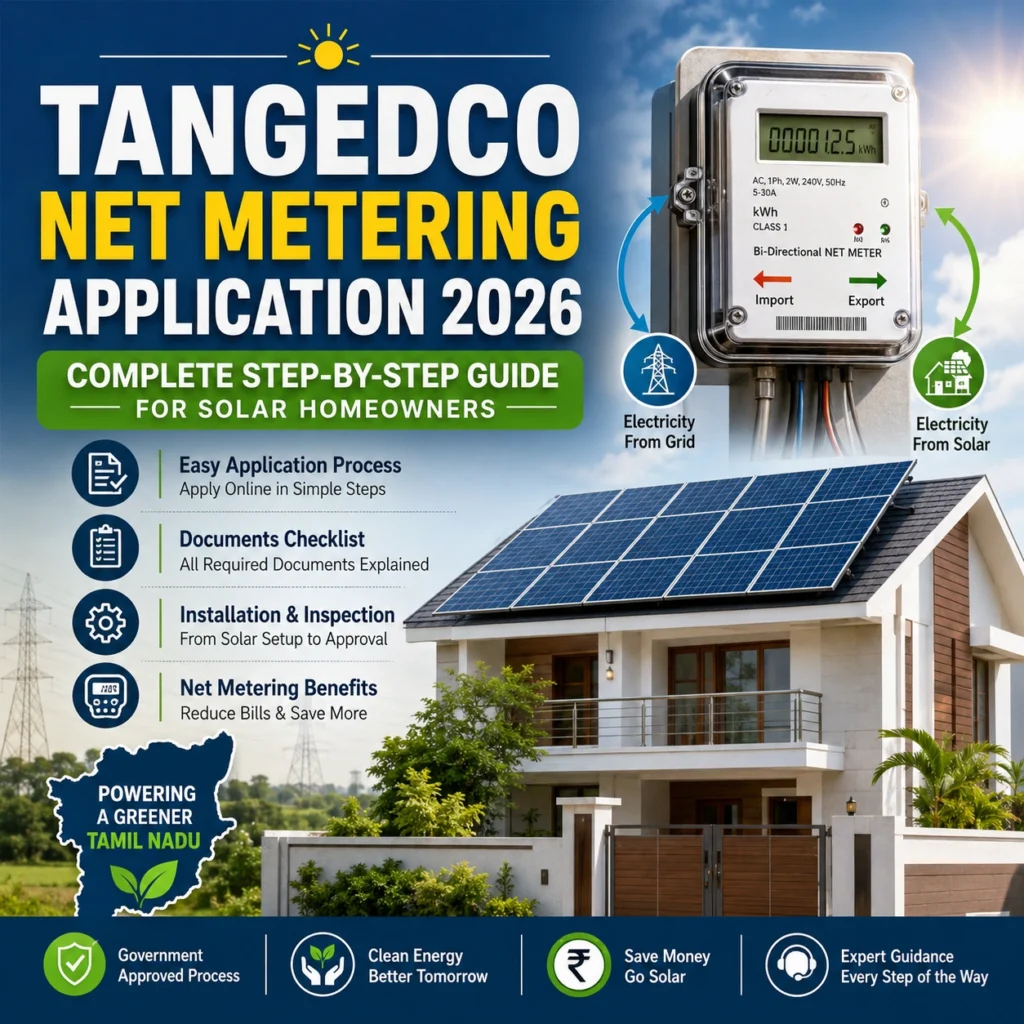
During the daytime, solar panels generate electricity that can be used directly by the property. If the solar system produces more electricity than the property consumes at that moment, the surplus can be exported to the grid through a suitable bidirectional meter.
When solar generation is insufficient, electricity can be drawn from the grid as usual.
The meter records electricity flowing in both directions, helping the electricity distribution utility account for imported and exported energy according to the applicable rules and regulations.
What Is the TANGEDCO Net Metering Application 2026?
The TANGEDCO Net Metering Application 2026 refers to the online process for applying for rooftop solar connectivity and net-metering-related services in Tamil Nadu.
The official Unified Solar Rooftop Portal provides facilities for different categories of consumers, including applications under the PM Surya Ghar scheme for eligible domestic consumers and non-subsidy solar applications. The portal also facilitates applications for installation of net meters to measure energy exported to the grid.
For applicants, the online process makes it easier to submit information, track applications and upload required documents without depending entirely on physical paperwork.
Who Can Apply for Solar Net Metering?
Eligibility depends on the consumer category, sanctioned electrical load, proposed solar capacity, applicable regulations and the technical feasibility of connecting the proposed system to the distribution network.
Before proceeding, consumers should check the current requirements on the official solar rooftop portal and confirm the technical suitability of the proposed installation.
For subsidy-linked residential installations, applicants may also need to follow the requirements of the PM Surya Ghar scheme and use an eligible vendor where applicable.
Documents Required for the Application
The exact documents can vary depending on the application type and consumer category. Applicants should keep commonly required information and documents ready, such as:
- Electricity service connection or consumer number
- Registered mobile number
- Consumer details
- Property and installation address
- Sanctioned electrical load
- Proposed solar PV capacity
- Applicant identification details
- Bank details where applicable for subsidy-related applications
- Solar installation and commissioning documents
- Vendor-related details
- Photographs and technical documents where requested
It is important to enter the consumer number and other details exactly as they appear in the electricity records. Incorrect information can result in application corrections or delays.
Step-by-Step TANGEDCO Net Metering Application 2026
Step 1: Visit the Official Solar Rooftop Portal
Begin by visiting the official Unified Solar Rooftop Portal provided by TNPDCL/TANGEDCO.
The official portal is available at the TNPDCL solar rooftop website and provides options for applying for solar rooftop systems and net-metering services.
Official TNPDCL Unified Solar Rooftop Portal
Step 2: Register Using Your Consumer Details
Create or access your application using the required consumer information.
Keep your electricity service connection number and registered mobile number available while starting the application. Accurate consumer information helps the application get associated with the correct electricity connection.
Step 3: Select the Appropriate Solar Application
The portal provides different application routes depending on whether the consumer is applying under a subsidy scheme or making a non-subsidy application.
For non-subsidy applications, the official application form includes fields such as account number, district, address, pincode, tariff code, sanctioned load, phase, vendor name and proposed solar PV capacity.
Select the application type that matches your solar installation.
Step 4: Enter Solar System Details
Provide the required details about the proposed solar PV system.
This may include:
- Proposed solar capacity
- Solar module information
- System type
- Vendor details
- Electrical connection information
- Other technical details requested by the portal
Make sure the proposed system capacity is appropriate for the property’s electricity connection and applicable regulations.
Step 5: Technical Feasibility and Utility Approval
After submission, the application goes through the applicable technical and administrative process.
The electricity distribution utility evaluates whether the proposed solar system can be connected safely to the existing network. Technical feasibility is an important part of rooftop solar grid connectivity because the system must comply with applicable electrical and safety requirements.
Applicants should wait for the required approval or communication before proceeding with any stage that requires utility authorization.
Step 6: Install the Rooftop Solar System
Once the applicable approvals and requirements are completed, the solar PV system can be installed through the selected vendor.
The installation should follow the required technical, electrical and safety standards. Proper installation is important for both system performance and successful grid connection.
Step 7: Submit Installation and Commissioning Details
After installation, the required commissioning information and supporting documents must be submitted through the applicable portal process.
The official portal provides facilities for modifying applications and uploading items such as net-meter agreements, plant photographs and DCR-related details where applicable.
Step 8: Inspection and Verification
The installed solar system may be inspected or verified by the electricity utility according to the applicable procedure.
The purpose of this stage is to ensure that the installation meets the required technical and safety conditions before grid synchronization.
Step 9: Installation of the Net Meter
Once the required verification and approvals are completed, the appropriate bidirectional/net meter can be installed.
A net meter enables measurement of electricity imported from and exported to the grid. This is an important final stage before the rooftop solar system operates as an approved grid-connected installation.
How Does Net Metering Help Solar Consumers?
Net metering can provide several benefits to consumers with suitable grid-connected rooftop solar systems.
Lower Electricity Costs
Solar generation can reduce the amount of electricity purchased from the grid, helping consumers lower their electricity expenses over the long term.
Better Use of Solar Generation
Surplus electricity generated during periods of low consumption can be exported to the grid according to the applicable metering mechanism.
Improved Solar Investment Value
Grid-connected solar can improve the overall utilization of a rooftop solar installation, particularly for consumers whose electricity consumption varies throughout the day.
Environment-Friendly Power Generation
Solar energy generates electricity without the direct combustion of fossil fuels during operation, making rooftop solar an important renewable-energy option.
Common Mistakes to Avoid
Applicants should be careful about a few common issues during the application process:
Incorrect consumer number:
Always verify the electricity service connection number before submitting the application.
Wrong system capacity:
The proposed solar capacity should be selected after considering electricity consumption, sanctioned load, roof space and applicable requirements.
Incomplete documents:
Missing information can lead to requests for corrections or additional submissions.
Unqualified installation:
Use a suitable and authorized/eligible vendor wherever the applicable scheme or process requires one.
Ignoring technical requirements:
Solar systems connected to the electricity grid must comply with applicable electrical and safety requirements.
Why Choose SVT Solar for Rooftop Solar Installation?
Understanding the application process is only one part of installing a rooftop solar system. Proper system design, component selection, installation quality and documentation are equally important.
SVT Solar can help customers understand the rooftop solar installation process, evaluate their requirements and coordinate the necessary stages involved in moving from system planning to installation.
A professional solar installation approach can help reduce errors, improve system performance and make the overall process more convenient for consumers.
Final Thoughts
The TANGEDCO Net Metering Application 2026 process is an important step for consumers planning a grid-connected rooftop solar system in Tamil Nadu. From portal registration and application submission to technical approval, installation, verification and net-meter installation, each stage should be completed carefully.
The official Unified Solar Rooftop Portal provides online facilities for rooftop solar applications and net-metering-related services.
If you are planning to install solar panels for your home or property, working with an experienced solar installation company such as SVT Solar can make the planning and implementation process easier.
Before submitting an application, always verify the latest eligibility conditions, technical requirements, applicable charges, documentation and procedures through the official TNPDCL/TANGEDCO portal, as these requirements may be updated from time to time.
Frequently Asked Questions
1. Where can I apply for rooftop solar net metering in Tamil Nadu?
Consumers can use the official Unified Solar Rooftop Portal for applicable rooftop solar and net-metering applications.
2. Can I apply for a non-subsidy solar installation?
Yes. The official portal provides a non-CFA application route for consumers who are not applying for subsidy under the applicable scheme.
3. What does a net meter measure?
A bidirectional net meter records electricity imported from the grid and electricity exported from the rooftop solar system to the grid.
4. Can I check or modify my application online?
The official portal provides application-status and modification facilities, including options for uploading certain required documents.
5. Should I check the latest requirements before applying?
Yes. Solar regulations, application procedures, eligibility conditions and portal requirements can change. Applicants should verify the latest information on the official TNPDCL/TANGEDCO portal before submitting an application. Contact SVT Solar for more informations or also Visit our location directly.